
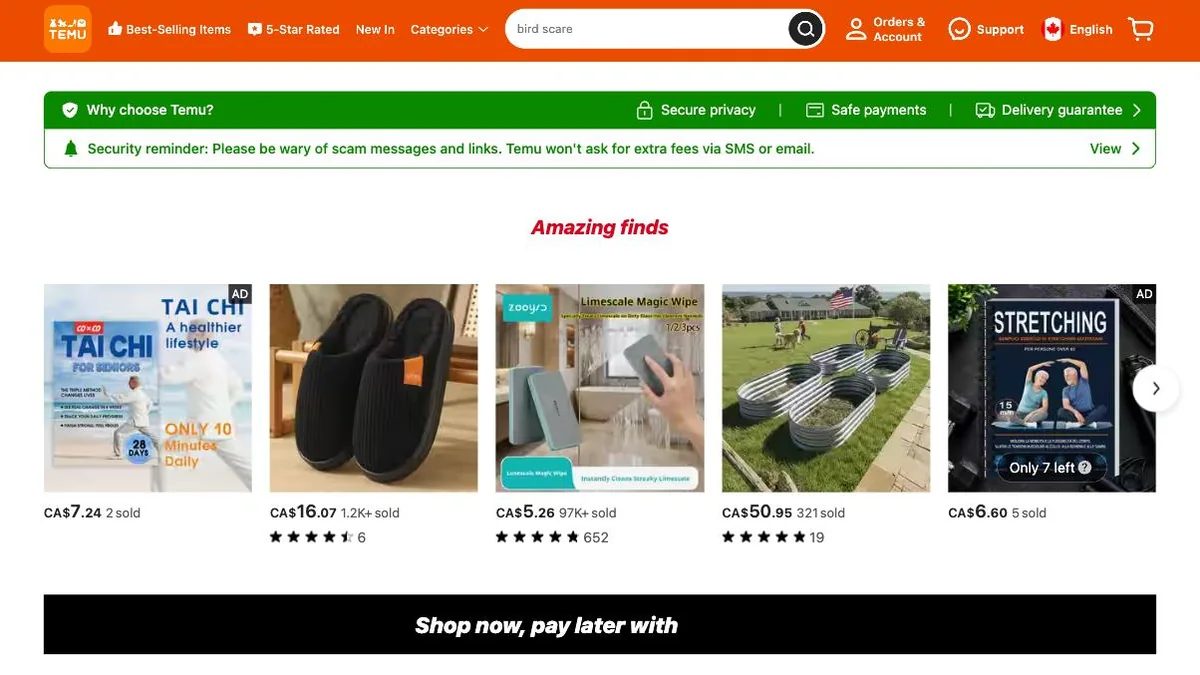
Temu, owned by PDD Holdings, generates tens of billions of dollars in revenue every year. Yet with widespread customer complaints about item quality, shipping delays, return difficulties, and unexpected charges, one must wonder: is Temu a scam?
First things first: Temu is a legitimate company. Founded in 2022 with operational headquarters in Boston, Massachusetts, Temu ships products directly to global consumers from manufacturers primarily based in China. Temu’s parent company, PDD Holdings, manages large-scale international commerce operations.
Temu is decidedly not a scam in the legal sense, but serious consumer risks and security concerns remain.
Avoiding Temu Impersonation Scams
Because Temu is a globally recognized brand, threat actors routinely impersonate the platform to harvest credentials and payment data.
- Watch for Typosquatting & Fake Ads: Scammers purchase lookalike domains and search ads to redirect shoppers to cloned checkout pages designed to steal credit card details.
- Beware of Spoofed Support Calls: Temu does not conduct proactive customer service over the phone. Anyone calling you claiming to be "Temu Support" is an attacker.
- Stick to Official In-App Channels: Virtually all legitimate Temu support communications occur through the authenticated in-app support center. Never call back numbers provided via SMS or unsolicited email.
Real Issues with Temu
When shopping on Temu, consumers should be aware of several major pitfalls:
- Inconsistent Quality: Product quality varies wildly. Many items suffer from manufacturing defects or look significantly different from their online catalog photos. Always look for verified reviews that include unedited customer photos.
- Difficult Returns & Customer Service: Numerous complaints have been filed against Temu with the Better Business Bureau (where Temu holds a "B" rating). Most complaints cite unhelpful automated live chat support and restrictive return processes. Assume that returning a low-cost item may be more trouble than it's worth.
- Data Collection & Privacy Concerns: Privacy researchers and regulators have scrutinized how Temu's mobile app and website collect user data. If you choose to shop on the platform, use a private browser window or VPN rather than installing the mobile app with broad device permissions.
- Hazardous Materials & Safety Violations: Independent testing across multiple EU nations revealed hazardous substances, chemical violations, and safety hazards in certain items. In mid-2026, the European Commission fined Temu €200 million under the Digital Services Act (DSA) for failing to adequately protect consumers from unsafe or non-compliant goods, such as electronics failing basic safety standards and baby toys posing choking hazards.
While Temu offers ultra-competitive prices that frequently undercut major retail platforms, the burden of due diligence falls entirely on the buyer.
Secure Yourself and Your Organization
Stingray Security offers tools to protect individuals and organizations from fraud and impersonation. Stingray’s Verify portals safeguard companies against wire fraud and vendor impersonation, while the free browser extension flags phishing domains and lookalike merchant sites.
The Bottom Line
Temu is a legitimate direct-to-consumer marketplace. However, its rock-bottom pricing comes with tangible tradeoffs: quality inconsistencies, return friction, and potential safety concerns on uncertified items.
Many scammers do make duplicate copies of Temu to get credit card information
If you use Temu, apply basic digital hygiene: buy low-risk goods (like simple household items rather than electronics or children's toys), keep transactions off the mobile app, and never trust third-party messages claiming to represent Temu customer support.